Q&A: Small size conveyor chain
We have posted frequently asked questions from customers in Q&A format. Please click on the question to proceed to the answer.
Small size conveyor chain
Words in Q&Aof

| Q1 | What kind of chain is suitable for intermittent conveyors that require precise positioning? | ||||||||||||||||||||||||||||||
|---|---|---|---|---|---|---|---|---|---|---|---|---|---|---|---|---|---|---|---|---|---|---|---|---|---|---|---|---|---|---|---|
| A1 |
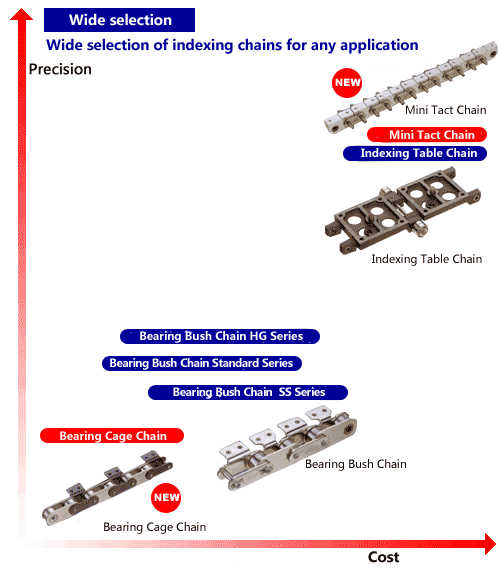
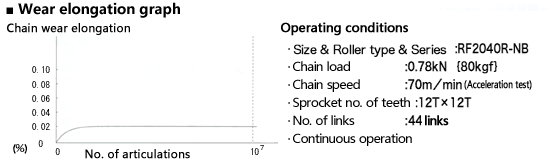
Automated lines for processing, assembly, inspection, etc. have linear base machines (intermittent transfer conveyors) that ensure positioning accuracy. Chains are used as part of the transfer system, but with normal chains, sliding wear between the pins and bushings causes the chain to wear out and stretch, causing the stopping position to become distorted. This requires frequent position adjustment (maintenance).
|
||||||||||||||||||||||||||||||
| Q2 | What is the operating temperature of intermittent conveyor chain? | ||||||||||||||||||||||||||||||
| A2 |
The operating temperature range for intermittent conveyor chains is determined based on the range within which the chain's performance can be maintained and the material properties of the parts used. Since this varies depending on the product type, please check your operating conditions and use within the following range.
*Stopping accuracy is the actual value achieved by customers who have used the product in the past. It is not a guaranteed value. Back to Questions |
||||||||||||||||||||||||||||||
| Q3 | Is there Plastic Roller chain that can be used at high temperatures? | ||||||||||||||||||||||||||||||
| A3 |
Plastic Roller chains are used in a variety of industries as chains that take advantage of the properties of plastic material, offering the advantages of being lightweight, low noise, and low friction.However, because the operating temperature range for Plastic Roller chains (roller material: polyacetal) is -10°C to 80°C, they cannot be used in preheaters or dryers that exceed 80°C, so steel or stainless steel chains have traditionally been used. |
||||||||||||||||||||||||||||||
| Q4 | What are the features of Double Plus Free Flow Chains Lambda specification (Lube-free)? | ||||||||||||||||||||||||||||||
| A4 |
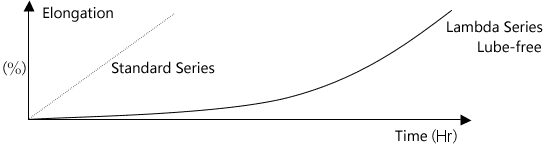
Double Plus Free Flow Chains lambda specification (Lube-free) has the following two features. Long life Lube-free Double Plus Free Flow Chains Lambda specification (Lube-free) can be used Lube-free, and has a long life thanks to the effect of special oil-impregnated bush. Low noise Standard Series Double Plus Free Flow Chains can operate at 1/2.5 the speed of the transported goods, making them 15% quieter than chains with outboard roller or top rollers. However, if Standard Series Double Plus Free Flow Chains are used for long periods Lube-free, they will produce a squealing noise between the pins and bushes. Lambda Double Plus Free Flow Chains (Lube-free) use oil-impregnated bushes to ensure that the right amount of lubrication is distributed between the pins and bushes, preventing squealing and maintaining a quiet environment for a long period of time.
|
||||||||||||||||||||||||||||||
| Q5 | What precautions should I take when using two chains in parallel? | ||||||||||||||||||||||||||||||
| A5 |
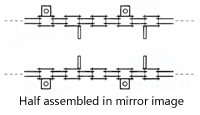
Chain lengths vary within the tolerance (total length tolerance). However, when using two chains side-by-side, it may be desirable to align their relative positions as closely as possible depending on the application (for example, when connecting the two chains with a jig such as a slat). In such cases, if you specify "total length combination" when ordering, we can measure the total length of each chain and manufacture them so that the relative difference between the left and right chains is minimal. Also, if the attachment spacing is unusual, or if attachments like the one shown in the diagram below are used, the positions of the opposing attachments will be misaligned when used in parallel. In such cases, if you specify "mirror Image" when ordering, we will manufacture the attachments of one set of chains so that they are symmetrical. <Example Order>
|
||||||||||||||||||||||||||||||
| Q6 | When should you use S rollers and R rollers? | ||||||||||||||||||||||||||||||
| A6 |
There are two types of Double pitch: S rollers and R rollers. Their features and uses are as follows:
*1. Comparison of the two when the same chain size and operating conditions are used.
|
||||||||||||||||||||||||||||||
| Q7 | Can RS standard sprockets be used for Double pitch? | ||||||||||||||||||||||||||||||
| A7 |
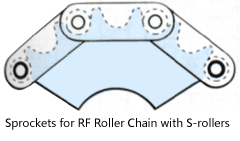
<If the roller is an R roller> Please use the "Double pitch R roller dedicated sprocket." <If the roller is an S roller> You will need to use a "Double pitch S roller dedicated sprocket," but if the number of teeth is 30 or more, you can use a standard RS sprocket. Please note that if you use an RS sprocket with 29 or fewer teeth, the chain pitch and the sprocket tooth pitch will be misaligned, preventing smooth meshing and resulting in poor operation.
With S rollers, the chain engages with every other tooth, as shown in the diagram. Therefore, when actual number of teeth (apparent number of teeth) is odd, the rollers engage with different teeth with each rotation of the sprocket, resulting in less wear on the sprocket and a longer lifespan. When using an RS sprocket with 30 or more teeth, first consider whether an odd number of teeth can be used. |
||||||||||||||||||||||||||||||
| Q8 | How should curved chains be guided? | ||||||||||||||||||||||||||||||
| A8 |
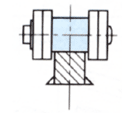
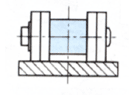
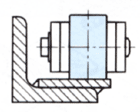
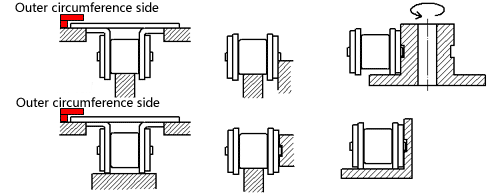
When using a curved chain, there is a high possibility of derailment if the guide is only on the roller surface. Therefore, we recommend using two guides: on the roller surface and on the side of the plate.
|
||||||||||||||||||||||||||||||
| Q9 | What is the minimum number of teeth on the sprocket when using the GNK1 attachment? | ||||||||||||||||||||||||||||||
| A9 |
When attaching a bar to the GNK1 hole of a double-pitch GNK1 Double pitch (an attachment with holes in the plates on both sides), if the number of teeth on the sprocket is small, the bar will interfere with tooth root. |
||||||||||||||||||||||||||||||
| Q10 | What types of conveyor chain attachments are available? | ||||||||||||||||||||||||||||||
| A10 |
Attachments are parts used to attach transport jigs to chains. A attachment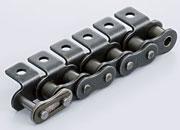
This type of chain has an attachment with holes on one side. It is called A1 or A2 depending on the number of holes. (RS type only has A1.) SA attachment
This type has a vertical attachment with holes on one side of the chain. It is called SA1 or SA2 depending on the number of holes. (RS type only has SA1.) K attachment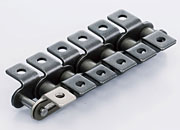
This type has attachments with holes on both sides of the chain. It is called K1 or K2 depending on the number of holes. (RS type only has K1.) SK attachment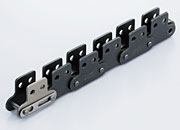
This type has vertical attachments with holes on both sides of the chain. It is called SK1 or SK2 depending on the number of holes. (RS type only has SK1.) AA attachment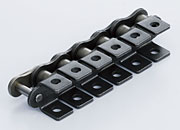
This type of chain has attachments with holes on the top and bottom of one side. It is called AA1 or AA2 depending on the number of holes. (RS type only has AA1.) WA attachment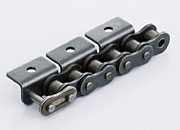
This type of chain has a wide attachment with holes on one side. It is called WA1 or WA2 depending on the number of holes. RS chains cannot have attachments attached to each link. KK attachment
This type has attachments with holes on both the top and bottom of the chain. It is called KK1 or KK2 depending on the number of holes. (RS type only has KK1.) WK1 attachment
This type of chain has wide attachments with holes on both sides. It is called WK-1 or WK-2 depending on the number of holes. RS chains cannot have attachments attached to each link. EP Attachment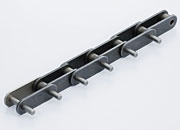
This is a style in which the chain pin is extended to one side. GNK Attachment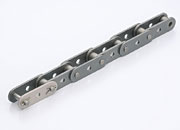
This type of chain has holes in the plates on both sides. (Double pitch is limited to S-roller chains.) Hollow Pin Chain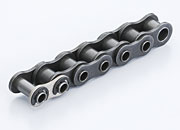
The pins of this chain are hollow. Although the S-roller type is called an S-roller for convenience, it does not have rollers and is a bushed type. Special Attachmentお客様にあわせたアタッチメント形式も取揃えております。Organization Attachments can be installed at intervals of one link or more, but when installing them at every even number of links, they should be installed on outer link, which makes them convenient for repairs. Back to Questions |
||||||||||||||||||||||||||||||