
Attachments are shifting from "choosing" to "creating."
Tsubaki Small size conveyor chain Integrated Attachment Chain
- Attaching the jig is troublesome.
-
Attaching jigs to the chain attachments I purchased is a hassle, and making jigs that match the shape of the chain attachments and the items being transported is also troublesome.

- The jig comes off.
-
Jigs that have been added to chain attachments with bolts, nuts, or welding may come loose, which poses a risk of foreign object contamination, especially in food processing machinery.


That problem,
Integrated Attachment Chain
I'll solve it in one go!
What is Integrated Attachment Chain?
Integrated Attachment Chain is Small size conveyor chain from Tsubaki that incorporates specially shaped attachments. Instead of adding jigs to standard attachments afterwards, the attachments are pre-assembled into the chain during manufacturing, significantly reducing jig processing costs and installation time on equipment.
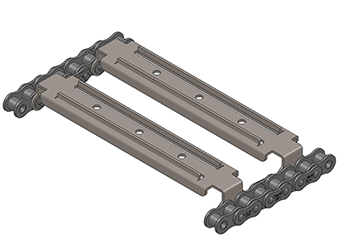
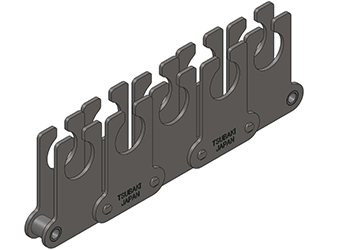
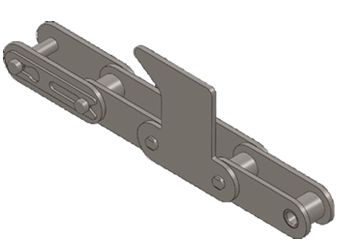
Benefits
Before the introduction Integrated Attachment Chain
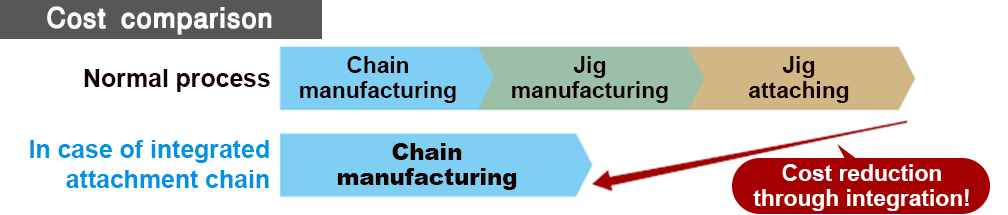
Chain production, jig production, and installation work are each handled by different companies.
Process management is complicated and costs are high.
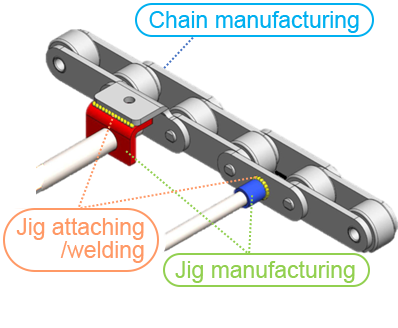

After the introduction of Integrated Attachment Chain
All unified under Tsubaki!
We propose optimal solutions for all aspects of process, cost, and design!
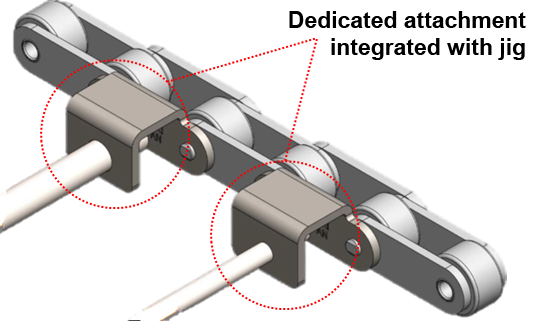
Significantly reduced effort and costs
Tsubaki can handle all the jig manufacturing and installation, helping to reduce costs!
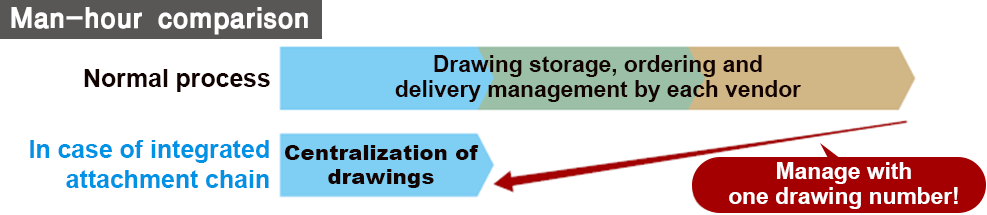
Tsubaki manages all drawings centrally by drawing number, so your next order will go smoothly.
All inquiries regarding delivery and specifications can be handled by Tsubaki.
Three application patterns for Integrated Attachment Chain
Tsubaki Integrated Attachment Chain can be manufactured in the following three patterns to meet customer needs.
- Pattern 1: Jig integration
- The jig and chain are manufactured as an integrated unit.
- Pattern 2: Jig supply
- We receive the jig made by the customer and attach it to the chain.
- Pattern 3: Jig manufacturing
- The jig and chain are made together and attached to the chain.
Case studies
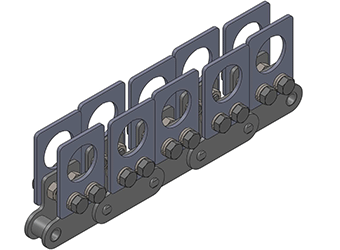
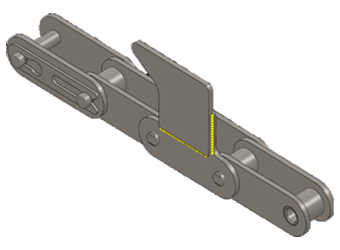
Pattern 1: Integrated jig; custom-made optimal shape.
Laser processing eliminates the need for molds, so even small lot production is possible.
Before
After
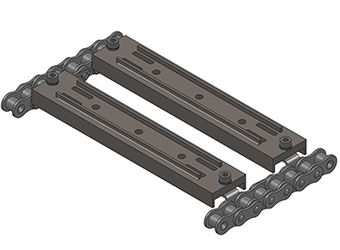
Unlike the conventional method of creating a jig by machining and then attaching it to the chain, the attachments for Integrated Attachment Chain can be created using a laser processing machine.
Since there is no need to create complex molds, we can also handle small lot orders.
We can reduce mold costs for prototype projects and deliver special-shaped chains at relatively low prices.
No jig fabrication, assembly, or welding required... Therefore, it reduces man-hours and improves quality.
Before
Before
After
After
The conventional method of adding jigs after the fact requires processes such as sheet metal processing, assembly, and welding, which increases labor costs and expenses.
Because Integrated Attachment Chain are manufactured with jigs and attachments integrated to suit the purpose of conveying, customers do not need to manufacture, assemble, or weld jigs. This contributes to reducing total costs, including processing and assembly man-hours, and also helps prevent jigs from coming off, prevents foreign object contamination in food processing machinery, and improves the accuracy of jig mounting positions.
Pattern 2: Jig provided or Pattern 3: Jig manufactured
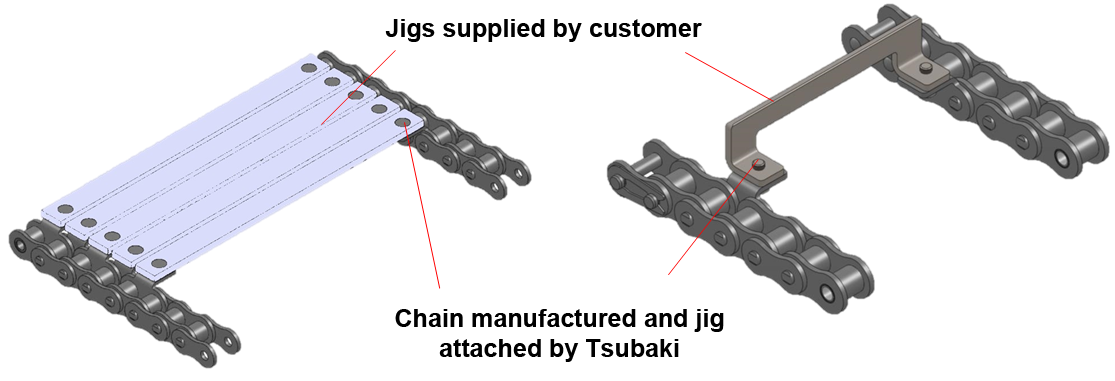
Customers can now provide jigs such as slats and scrapers that they would previously have manufactured and installed themselves, and we will install the jigs when manufacturing the chain. We can also manufacture jigs ourselves. By outsourcing the entire process of jig manufacturing, jig installation, and chain manufacturing to us, customers can significantly reduce the number of jig manufacturing and installation costs and man-hours required.